
- 作者:纯公邓卓
- 来源:封神榜
- 发布时间:2026-08-26
临时天堂
Rachana Shah And Rhythm Wagholikar Bring Out The Story Of Maay Bhavani._我的网站

一 |
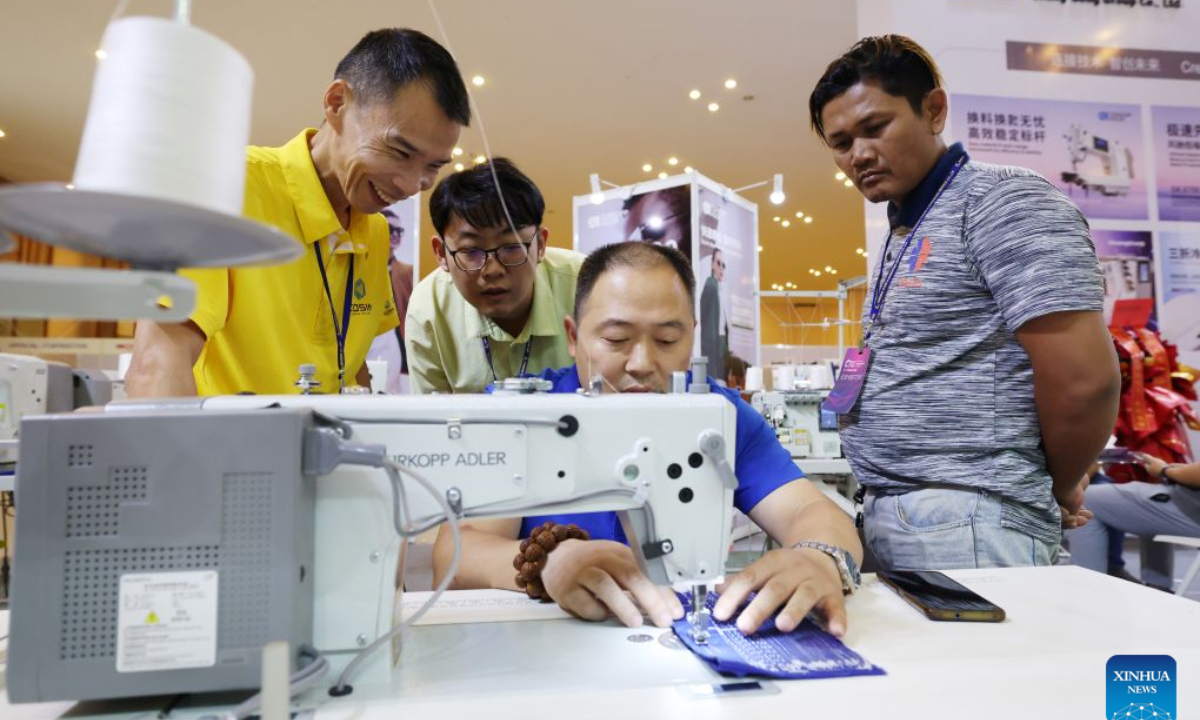
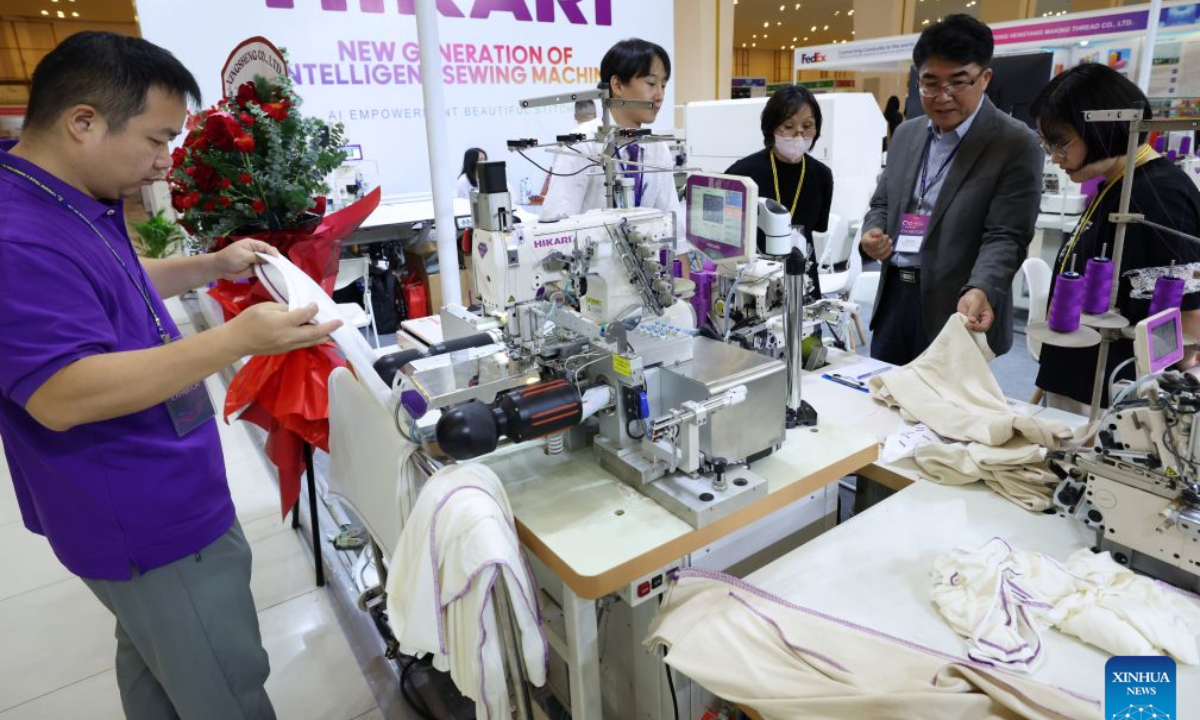
The four-day expo, which runs from Thursday to Sunday, features more than 200 local and international exhibitors.
A significant portion of these participants comprises Chinese companies across four core sectors: machinery and automation, textiles and garments, plastics and rubber, and printing and packaging.
Organized by Yorkers Trade & Marketing Service Co., Ltd. in collaboration with the Ministry of Industry, Science, Technology & Innovation, the expo provided a platform to showcase emerging industrial technologies, foster business connections and support the modernization of Cambodia's manufacturing sector.
According to official ministry data, Cambodia had 3,357 operational factories as of July 2026. These facilities employ over 1.35 million workers, more than 70 percent of whom are women.
Total factory investment in the kingdom reached approximately 28 billion U.S. dollars, a 29 percent increase compared to the same period in 2025. Additionally, industrial production during the first half of 2026 was valued at over 9.8 billion dollars, including roughly 7.3 billion dollars in goods manufactured for export.
Cambodian Minister of Industry, Science, Technology and Innovation Hem Vanndy urged Cambodian enterprises to embrace advanced technologies to boost productivity, improve quality, and sharpen their competitive edge.
"Artificial intelligence, production-line automation, robotics, digital technologies and smart manufacturing are increasingly determining the competitiveness of nations," he said during the expo's opening ceremony on Thursday.
"Cambodia cannot remain outside this transformation," Vanndy said. "We must embrace new technologies to increase productivity, reduce costs, improve product quality and strengthen the competitiveness of our enterprises."
Chim Vinly, the expo's organizing staff member, said the exhibition plays a vital role in introducing innovative manufacturing technologies to Cambodia's garment sector, as attendees can explore a diverse range of advanced machinery designed to elevate production standards.
"Most exhibitors represent the textile and garment industries, with the majority being local and Chinese companies," he told Xinhua on Saturday.
"These advanced manufacturing tools have boosted productivity and modernized local production chains. In particular, they make work faster and more efficient," he added.
Vinly said the annual event plays a vital role in further expanding bilateral trade between China and Cambodia.
"Chinese investment is crucial to boosting Cambodia's economic growth and generating job opportunities for the local workforce," he said.
Bo Seyma, a mechanic at Kosin Sewing Machine Co., Ltd., which supplies Cambodian factories with equipment from the Shanghai-based Shang Gong Group, said the expo is vital for showcasing cutting-edge machinery to the local garment industry.
He said the Kosin company is promoting sewing, embroidery, button, and backstitching machines, along with other equipment, to factories in Cambodia.
"These industrial machines are in high demand, with numerous factories placing purchase orders with our company," he told Xinhua on Saturday.
Seyma said these advanced machines are high-quality and built to last.
"These machines accelerate production efficiency while effortlessly meeting customer demands," he said.
Thong Mengdavid, deputy director at the China-ASEAN Studies Center of the Cambodia University of Technology and Science, said that Cambodia, a country heavily dependent on textiles and garments, has seen its cooperation with China evolve from providing raw materials like fabrics and finished consumer goods toward technological cross-pollination.
This allows local Cambodian plant managers and entrepreneurs to evaluate high-grade machinery directly, he added.
"Integrating China's technology, machinery, and tools into Cambodian factories will address several challenges in the local economy, such as enhancing output per hour, reducing material waste caused by human error, and fostering skill development among the workforce," Mengdavid said.
。 On Ram Navami, a festival that celebrates the birth of Lord Ram , the Navmi day of the chaitra Navratri and the enduring values of devotion and righteousness, Narendra Modi chose to share more than a customary greeting. His post featuring the devotional song “Maay Bhavani” brought a sense of spiritual depth to the occasion, reminding listeners of the quiet power of music rooted in faith. The song, from the Marathi film Shahbaz Sunbai, belongs to a time when cinema and music were deeply intertwined with cultural and devotional expression. Its composition by Meena Mangeshkar Khadikar carries a sincerity that avoids excess, allowing the essence of devotion to take centre stage. In an era of fleeting soundscapes, such compositions stand apart for their stillness and emotional clarity. It is, however, the voice of Lata Mangeshkar that celebrates “Maay Bhavani” into something timeless. Her music has long defined the emotional memory of India, moving effortlessly between romance, melancholy, and devotion. In songs of a spiritual nature, her voice often feels less like performance and more like prayer, marked by an almost meditative purity. This quality lends the composition a rare depth, making it especially fitting for a day like Ram Navami, where devotion is both personal and collective. For authors Rachna Shah and Rhythm Wagholikar, the moment carried a deeply personal resonance. Responding to the Prime Minister’s post, they shared a note that captured both gratitude and memory, offering readers a glimpse into the story behind the song. Their note is reproduced here in full: ⸻ Dear friends, It’s so heartwarming to see our honourable Prime Minister Shri. Narendra Modiji post a song on Maa Ambe - Maay Bhavani, on the auspicious day of Ram Navami. The striking part is that this song is composed by my mother Meena Mangeshkar Khadikar and sung by my aunt Lata Mangeshkar.. We just chatted with Aai and told her regarding this post. She shared an interesting behind-the-scene story. This song was originally to be composed by Lata didi herself, however during those days, Didi was overwhelmed with the work load and couldn’t dedicate the time required. So, she requested her sister Meena to step in and do the needful. Meena Mangeshkar Khadikar was an established composer and took charge and this composition took its birth… This post by our beloved Prime Minister opened up a floodgate of beautiful memories and with our heartfelt sentiments we stand in gratitude. Warm regards, Rachana Rhythm ⸻ What emerges from this reflection is a story of artistic trust and familial bond. The decision by Lata Mangeshkar to pass on the responsibility of composition to her sister reveals not just the pressures of her time, but also the quiet confidence she had in Meena Mangeshkar Khadikar’s musical sensibility. It is in such moments that enduring art often finds its form. The Prime Minister’s gesture, therefore, does more than revive a song. It reconnects audiences with a legacy, one that spans generations and continues to shape India’s cultural identity. For Rachna Shah and Rhythm Wagholikar, it is a moment of remembrance and gratitude. For listeners, it is an invitation to rediscover a melody that carries both devotion and history within it. Also Read: Sharda Sinha: A Voice That Became The Prayer of The Soil。
Current article:http://www.qiniaohongfangfoguisenzhai.cyou/tm2y/7jq29ft.doc
Published on:02:51:54
- 本文标签:
- 上海滩