少年包青天
China’s first supernode for 2t-parameter models enters service in Ulanqab_我的网站

A | A Mumbai special court under the Maharashtra Control of Organised Crime Act (MCOCA) has officially framed charges against five accused in the high-profile Salman Khan house-firing case, marking a major step forward in the investigation. The order was issued by Special Judge Mahesh Jadhav on Thursday, nearly a year and a half after gunshots were fired outside the actor’s Bandra residence, Galaxy Apartment, on April 14, 2024. The men charged include the alleged shooters Vickykumar (Vicky) Gupta and Sagarkumar (Sagar) Pal, along with Sonukumar Bishnoi, Rafiq/Mohammad Rafiq Chaudhary (Rafiq Sardar Chaudhary), and Harpal Singh. All five pleaded not guilty during the hearing and the matter will now proceed to trial. They are currently in judicial custody. According to the charge order, the accused were acting as part of an organised crime syndicate led by gangster Lawrence Bishnoi, with his brother Anmol Bishnoi also named as wanted in the case. The court noted that weapons and ammunition were allegedly provided by the Bishnoi network to execute the firing, adding that the attack was not meant merely as intimidation but carried the clear intention to kill the actor. The shooters reportedly arrived on a motorcycle in the early hours of the morning and opened fire toward the actor’s home. Earlier statements by Salman Khan, along with details in the FIR, indicate that the shots were aimed in the direction of areas he regularly uses inside the house. Another accused, Anujkumar Thapan, who was arrested in connection with the conspiracy, died by alleged suicide while in police custody last year. The court observed that the firing was part of a deliberate plan to create fear among Mumbai residents and reinforce the dominance of the Bishnoi gang. With charges now framed under MCOCA, IPC, the Arms Act, and other sections, the high-stakes case is set to move into the trial stage, drawing nationwide attention as proceedings continue.Also Read: Exclusive: “Salman Khan Will Be The Only and Best Choice to Play Me in a Biopic” – Dharmendra。
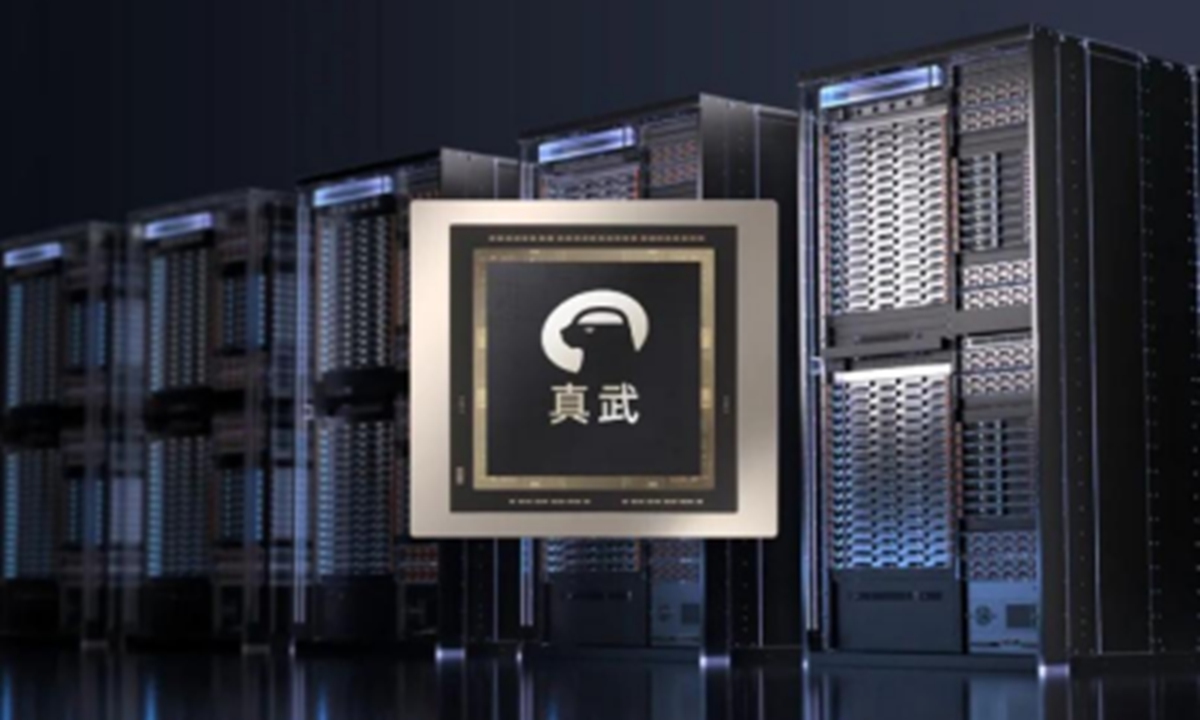
The instance is designed to handle inference for mixture-of-experts models with up to 10 trillion parameters, the company said in a statement sent to the Global Times on Wednesday.
This marks the first supernode-form computing architecture in China to successfully run large language models exceeding 2 trillion parameters, according to the company.
Industry expert Tian Feng told the Global Times that the commercial rollout of supernode infrastructure could significantly reduce training cycles, lower costs, and speed up iteration for AI developers requiring massive computational resources.
The company said the new instance has already been used to power commercial services for large language models such as KimiK3 and Qwen3.8Max.
The Lingjun Zhenwu M890 supernode instance supports FP8/FP4 low-precision computing. Through the ICNSwitch 1.0 chip, its scale-up interconnect scale has been expanded from 16 cards to 64 cards, with inter-card interconnect bandwidth boosted to 800 GB/s. Enterprises can provision 64-card, high-speed-interconnect computing units through the cloud without building their own data centers, according to the company.
In training scenarios such as autonomous driving and embodied intelligence, the instance delivers three times the training performance compared with the previous-generation Zhenwu 810E, the company said.
Ulanqab, where the supernode instance debuted, is one of Alibaba Cloud's five super data centers. The facility sources approximately 90 percent of its electricity from green energy, providing a low-carbon operating environment for high-density computing power.
Leveraging its climate, energy and network advantages, Ulanqab has transformed from "China's potato hometown" into the "token factory" - a term increasingly used in the AI industry to describe infrastructure dedicated to producing the digital building blocks generated by large language models.
By the end of 2025, the city had attracted 84 data center projects, including 81 intelligent computing centers, with total investment exceeding 500 billion yuan ($74.1 billion) and operational computing power reaching approximately 172,000 petaflops, ranking it firmly in the nation's top tier, according to domestic media reports.
On August 6, China's largest AI computing industrial park was completed and put into operation in Ulanqab. The project highlights a broader race in China to build massive AI data centers capable of supporting the next generation of AI models while addressing soaring electricity demand, according to Chinese experts.
In recent years, Inner Mongolia has been rapidly positioning itself as a global-scale AI computing center cluster. Major technology companies, including Huawei, Tencent, ByteDance and Alibaba; telecom operators China Mobile, China Telecom and China Unicom; as well as cyberspace infrastructure service provider VNET, have established computing facilities in the region.
As the AI industry gradually transitions from the training era to the inference era and large model parameters continue to expand, supernodes have become a central battleground for AI infrastructure.
Chinese vendors are accelerating deployments in this space. Huawei has commercially deployed more than 750 sets of its Ascend 384 supernodes across industries including internet, telecom operators, finance, education, healthcare, transportation and manufacturing. It is also the only domestic supernode to have trained state-of-the-art (SOTA) models.
Baidu AI Cloud has also launched its Tianchi 256-card supernode based on Kunlun chips, with support for major models including Wenxin, DeepSeek, GLM, and MiniMax.
Meanwhile, supercomputer manufacturer Sugon has unveiled China's first fully domestic 100,000-card AI supercluster Sugon 8000 (Dengfeng), integrating supercomputing and AI computing on a unified architecture. It has now been connected to the national supercomputing internet to provide computing services to government, research, and enterprise clients nationwide.
Tian, former dean of SenseTime's Intelligence Industry Research Institute, told the Global Times that the flurry of domestic supernode launches reflects a broader inflection point as China's AI sector pivots from training capacity toward efficient, large-scale inference.
The expert further said that the commercial viability of these systems - evidenced by Huawei's extensive deployed base, Baidu's rapid model adaptation and Sugon's integration into the national computing network - suggests domestic vendors are moving beyond proof-of-concept to genuine production-grade infrastructure, a prerequisite for sustaining the next wave of trillion-parameter model proliferation, Tian noted.
The move also underscores China's push for self-reliance in AI infrastructure as US chip export restrictions continue to tighten, Tian said, noting that, in the supernode domain, Chinese companies are shifting from imported graphics processing units toward homegrown interconnect chips and domestic compute clusters, a transition that could reshape value allocation across the AI industry chain.
。
Current article:http://www.qiniaohongfangfoguisenzhai.cyou/news/20260826_9805.xls
Published on:17:54:24