
无心法师
Chinese scientists develop ‘brain-reading’ AI model to help predict depression risk, may inspire future emotional-perception humanoids_我的网站

A | (新加坡讯)经营两家诊所的家庭医生黄祖卫157次提交假病历,骗取超过1万元CHAS津贴,昨早被判坐牢7个月。
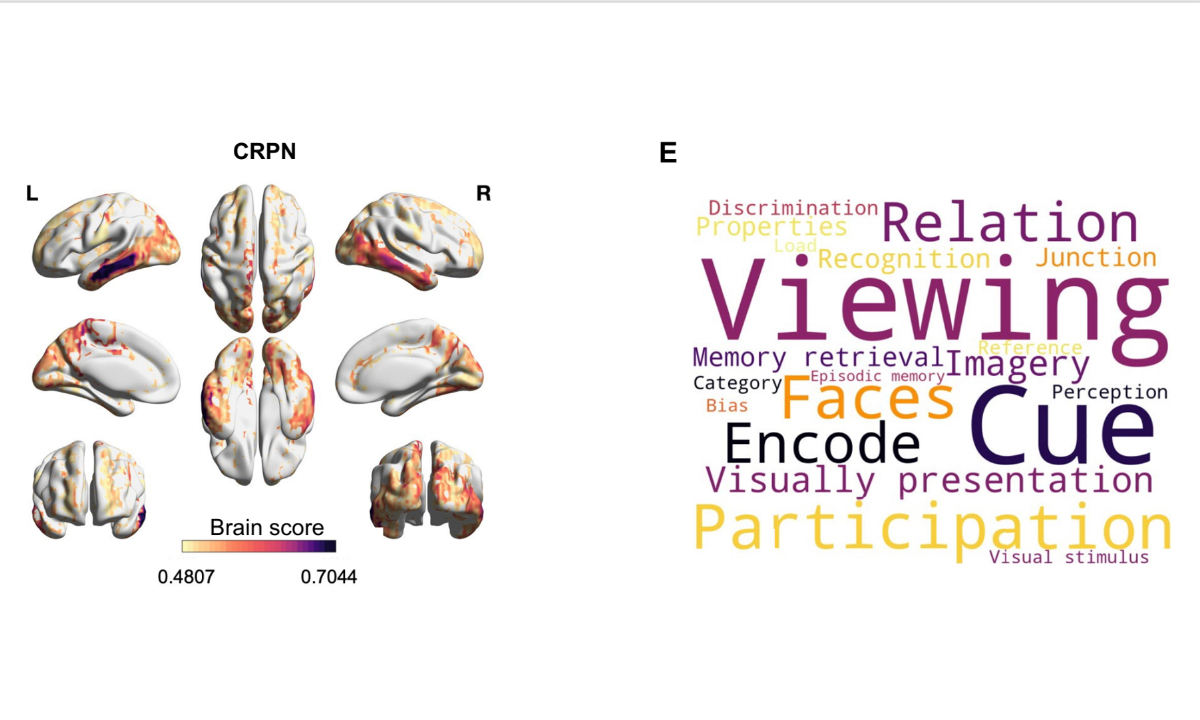
Chinese scientists have developed a “brain-reading” AI model that could help predict the risk of depression among adolescents up to four years in advance by analyzing how humans respond to facial expressions, a technology expected to inspire future development of embodied intelligent humanoids capable of perceiving human emotion and thoughts through nuanced facial cues.
WHO data show that around 332 million people worldwide have depression, about one-third of whom have treatment-resistant forms of the condition. In China, an estimated 95 million people suffer from depression, National Business Daily reported, citing statistics from the China Mental Health Survey.
Using data from a population-based longitudinal adolescent cohort recruited across several European countries, the research team led by Lu Han, assistant professor at the School of Artificial Intelligence, Shenzhen University, has built an AI model that predicted which 19-year-olds were more likely to develop depression at the age of 23. The predictions were backed up by an independent clinical cohort of individuals with depression. The team’s paper was published in the journal Science Advances this month.
According to Lu, the study used brain scans taken at age 19 to predict depression-related symptoms at age 23. The study focuses on adolescence because the transition from adolescence to early adulthood is a key developmental period when depressive symptoms can increase rapidly. The earlier risks are identified, the greater the opportunity for prevention, Lu told the Global Times on Monday, adding that the findings need to be further validated in middle-aged and older adults and across different ethnic groups in future research.
In this study, the researchers analyzed data from adolescents in the IMAGEN, a population-based longitudinal cohort recruited across several European countries. At age 19, participants underwent an fMRI emotional-face task, and their emotional symptoms were assessed using standardized questionnaires. Genetic data obtained from blood samples were also analyzed, and participants were followed up at age 23. The researchers examined whether neural representations of angry faces at age 19 were associated with emotional symptoms and could predict elevated emotional symptoms four years later.
According to Lu, people without depression can more easily distinguish emotional changes based on others’ facial expressions and respond accordingly – for example, responding with friendliness to a smiling expression. But people with depression cannot do this, and are more likely to assume people are angry with them.
A brain-aligned deep-learning model developed by Lu’s team suggested that those participants whose brains were less able to distinguish between different facial emotions and tended to perceive others as angry were more likely to develop symptoms of depression and anxiety in adulthood.
The hypothesis that adolescents at risk of depression may respond differently to other people’s facial expressions than those without such risk based on the negative information processing bias long observed in depression research: people at risk of depression are more likely to notice, interpret, or remember negative social information, Lu said.
The researchers focused on angry facial expressions because they signal social threat and rejection, which are closely linked to interpersonal difficulties and negativity bias associated with depression. They hope to further understand how this bias develops within the visual system.
Building on this, they created a deep learning model, which mimics how the brain processes visual information, to predict how the brain encodes abstract emotional concepts such as anger.
They found that 19-year-olds whose response to facial expressions was skewed in favour of negative emotions or memories were the most likely to develop some form of depression.
Based on these findings, Lu’s team then developed a marker that can identify possible warning signs.
According to Lu, the study found that the computational biomarker was linked to the depression-related variant rs11123030 and polygenic risk for depression, suggesting that genetic susceptibility may affect emotional perception. It also provided predictive information beyond family stress and socioeconomic factors, complementing rather than replacing environmental risk factors. Therefore, depression is neither purely genetic nor purely psychological, but a complex mental disorder arising from the interplay of genetic susceptibility, brain development, emotional and cognitive processes, and life experiences.
According to Lu, the study is also expected to advance AI by aligning deep neural networks with human brain activity and using parameter perturbations to probe neural mechanisms, allowing models to both predict and explain how biases may arise.
The findings suggest that future affective computing and embodied AI should go beyond simply labeling facial expressions, incorporating visual details while preventing prior assumptions from overriding real-time sensory input, Lu said, adding that the findings could provide valuable insights for developing more interpretable robotic perception systems that more closely emulate the way humans process emotions.
。

B | 黄祖卫(53岁)被控8项控状,其中包括4项欺骗罪以及4项伪造文件罪。被告原本不认罪,但审讯途中改变主意,于今年6月认罪,案件昨天下判。家庭医生黄祖卫被判坐牢7个月。根据之前报道,卫生部于2000年推出社保援助计划(Community Health Assist Scheme,简称CHAS),让低收入病人到参与计划的诊所看病时享有津贴。被告案发时经营两家诊所,分别是勿洛日夜诊所(Bedok Day & Night Clinic)和裕廊日夜诊所(Jurong Day & Night Clinic)。他于2012年2月15日,代勿洛诊所签下协议参与CHAS计划,同年6月15日,则代裕廊诊所参与CHAS计划。根据规定,诊所需在病人求诊的一个月内,上网申请CHAS津贴,并提交所需资料,包括病人个人资料、看诊日期、以及费用清单等。不过当局发现,被告在2015年40次提交虚假申请,为勿洛诊所骗取1755元CHAS津贴。被告也在2016年,至少76次做出同样罪行,骗取5872元CHAS津贴。为骗取津贴,被告还在2016年8月至12月间,至少21次在病人的病历上造假,谎称他们到诊所看病。

C | 综合所有控状,他共157次提交假病历,骗取1万1796元CHAS津贴。卫生部人员2017年2月进行审计时,发现被告的欺诈行为,商业事务局(CAD)事后介入调查。黄祖卫昨早被判坐牢7个月。 律师代被告求情时说,被告是一名尽心尽力的好医生,冠病疫情期间冒着风险为病人看病,还到老人院当义工,回馈社会,希望法官轻判坐牢4至5个月。律师也说,被告事后给予赔偿,病人也为他写人格证明书(testimonial),说他是名好医生,看病时会给折扣。律师表示,诊所有接受审计,因此罪行不难被揭发。
Current article:http://www.qiniaohongfangfoguisenzhai.cyou/m99/w8jmc.html
Published on:18:50:35
- 全市欧美同学会工作交流活动举行 为浙西片区创新创业共谋良策
- 最新通报!已成立联合调查组!
- 검찰, ‘수면제 비대면 처방·대리 수령’ 싸이 약식기소
- 我们会尽力地发光——各方积极探索退役运动员进校园初见成效
- 抖音广告应有尽有 甚至包括付费的盗版资源
- Instagram Reels: पापा की परी को भरना पड़ा 11000 जुर्माना... बाइक से स्टंट करते रील बना रही थी युवती, Bihar Police ने सिखाया सबक
- 四名丰盛湾青少年开着从罗托鲁瓦偷的车,被奥克兰警方追捕
- 樟宜机场举办最大型向日葵展 展出5000多株向日葵
- 我国将构建约6万公里精品自驾旅游公路
- The United Autoworkers Union says it is expanding its strike to include 8,700 workers at a Ford truck plant in Kentucky
- 社区Mod转正:CHERRY MX推出官方版Ergo Clear键轴
- “宝藏漳州·活力芗城”美好生活嘉年华举办
- IRS Backtracks, Edits Job Posting Seeking Agents Willing to 'Use Deadly Force' After Online Outrage
- 차세대 반도체 패키징 산업전 개막
- 新手做拼多多如何运营
- 金价暴涨,老庙黄金“玩不起”?订单拦截、拒发货引众怒
- 闲鱼验货宝报告出问题卖家拉黑我我却要承担费用
- SC Justice Brett Kavanaugh Flees Through Steakhouse Backdoor to Avoid Protesters
- 《共鸣:瘟疫传说传承》泄露已有人通关!全流程约14小时
- 隆多分析詹皇加盟76人的原因:另外几队问题明显,费城两人是关键