驱动精灵
已调整 27 次:闰秒有望退出历史舞台,明年改为推行闰时_我的网站

A | 8 月 25 日消息,国际计量局(BIPM)官宣将于 2026 年 10 月在法国凡尔赛国际会议中心举办第 28 届国际计量大会(CGPM),将讨论用闰时取代闰秒,并规划 2027 年 5 月开始推行。注:闰秒由国际计量局(BIPM)于 1972 年引入,截至目前已修改 27 次,目的是让世界协调时(UTC)与地球自转速度逐渐减慢相匹配。协调世界时(UTC)基于用原子振动实现的高精度原子钟来确定,成为 1 秒长度的标准。不过由地球自转时间决定的 1 天长度会发生不规则变化,因此会产生偏差。
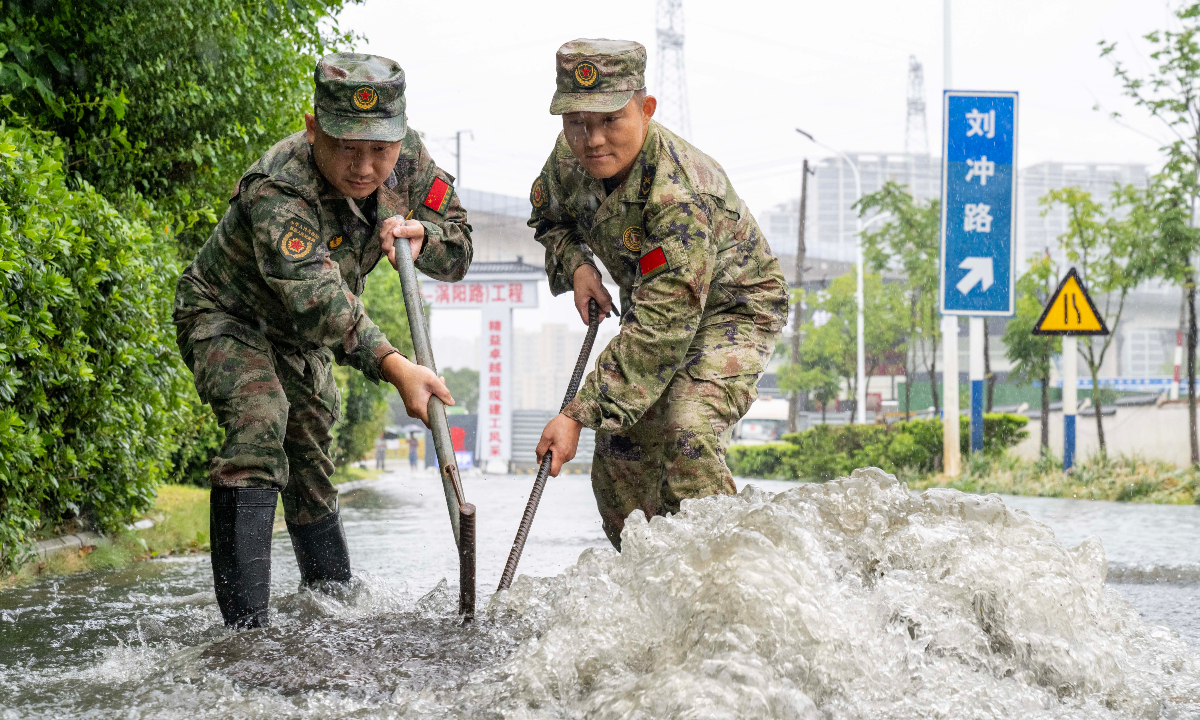
Local militia personnel clear water and drain waterlogged roads in Hefei, East China's Anhui Province, on August 11, 2026. Photo: IC
Typhoon Dolphin stopped being numbered at 5 pm on Tuesday, however its impacts continue as it triggered strong winds and heavy rainfall in inland areas as far north as Beijing. The National Meteorological Center (NMC) issued an orange alert for heavy rain, along with blue alerts for severe convective weather. Some areas are expected to see rainfall of 250 to 300 millimeters, CCTV News reported on Tuesday.
The China Meteorological Administration maintained a Level II emergency response on Tuesday as Typhoon Dolphin, its remnants, and cold air were forecast to bring heavy rain to parts of eastern and northern China including Zhejiang, Jiangsu, Anhui, Hubei, Henan, Shandong, Shanxi, Hebei and Beijing over the next three days, CCTV reported.
From Tuesday morning to Wednesday morning, parts of multiple regions including western Jiangsu, north-central Anhui, Henan, central and western Hubei, western and southern Hebei, Beijing, central and western Inner Mongolia, northwestern Heilongjiang, and southwestern Yunnan are expected to experience heavy to torrential rainfall. Some areas in central Henan could see extreme rainfall, with accumulated precipitation reaching 250 to 300 millimeters, according to CCTV.
Beijing activated a Level II flood-control emergency response at 9 am on Tuesday, with authorities at all levels throughout the city mobilizing flood prevention measures, CCTV reported. Meanwhile, the Ministry of Natural Resources launched a Level IV geological disaster defense response for Beijing at 3 pm on Tuesday.
According to the Beijing Meteorological Service's forecast, from Tuesday evening through Thursday, most parts of Beijing will experience heavy rainfall, with accumulated precipitation expected to exceed 100 millimeters in six hours and 150 millimeters in 24 hours.
In seven areas including Tongzhou, Daxing, Fangshan, Mentougou, the Beijing Economic-Technological Development Area, Huairou, and Fengtai, six-hour rainfall totals could exceed 150 millimeters, while 24-hour accumulations could surpass 200 millimeters, CCTV reported.
Beijing receives an average of 528 millimeters of precipitation annually, with most of it typically concentrated between June and September. Therefore the rainfall in 24 hours since Tuesday evening would likely be equivalent to more than one-third of the city's annual rainfall.
Beijing's flood control authorities ordered personnel responsible for urban waterlogging hotspots to take their posts from noon on Tuesday, with drainage equipment and flood barriers pre-positioned.
The city's flood control authorities also ordered the evacuation of people in flood- and landslide-prone areas before 6 pm on Tuesday and required work at construction sites to be suspended and mountain campsites and related tourist attractions to be closed.
Starting Wednesday, Beijing will encourage flexible work arrangements and staggered commuting, while schools may suspend classes and offline training, as well as outdoor teaching activities. Outdoor sports events will be halted, traffic controls imposed in high-risk areas, and public transport adjusted according to weather conditions and safety needs, CCTV reported.
As significant rainfall is expected to begin affecting western and southern parts of Shandong Province on Tuesday, Jinan city has taken precautionary measures in advance, with multiple large and medium-sized reservoirs carrying out controlled pre-releases to create additional flood-control capacity and prepare for rainfall brought by the typhoon, CCTV reported.
In Henan Province, the provincial department of water resources and provincial meteorological service jointly issued a red alert for flash floods at 8 am. It is forecast that from 8 am Tuesday to 8 am Wednesday, some mountainous areas in multiple cities and counties are at relatively high risk of flash flood.
Typhoon Dolphin's impact is far from over despite the typhoon having made landfall twice in Zhejiang. Zhang Fanghua, chief forecaster at the NMC, said on Monday that Dolphin's extensive cloud system and abundant moisture reserves have prevented its residual circulation from dissipating quickly. Instead, the residual circulation is expected to continue moving northward and westward. Over the next week, it is forecast to bring widespread and prolonged heavy rainfall to East China, North China, the Huanghuai region and even Northeast China, with some areas potentially experiencing extreme rainfall, the Science and Technology Daily reported.
Ma Jun, director of the Institute of Public and Environmental Affairs, told the Global Times that as the typhoon moves northward, it could encounter cold air from the north, potentially bringing not only heavy rainfall but also severe convective weather. Such weather can trigger disasters such as flash floods and mudslides, cause urban flooding, and affect farmlands.
。地球的自转速度根据潮汐涨落以及地球内部地核运动而波动。地球的一天即地球自转一圈,大约需要 86,400 秒。闰秒的作用就是调整与原子钟的偏差,当偏差累积即将超过 0.9 秒时,就会在一天中增加 1 秒。闰秒需要经常性修改,会导致混乱,而引入闰时后数百年内无需修改。
Current article:http://www.qiniaohongfangfoguisenzhai.cyou/g48/nsdn.xlsx
Published on:15:18:06


